
Power of Attorney Apostille in India: Complete Guide

If you need to use a Power of Attorney outside India, it may require an Apostille before it is accepted by foreign authorities. An Apostille POA in India is commonly needed for property matters, business purposes, legal representation, and other official use in foreign countries.
In this post, you’ll know everything about the Power of Attorney Apostille India process, including eligibility, required documents, and step-by-step procedure.
Purpose Of An Apostille Power Of Attorney
Abroad courts, government offices, banks, and Land & Property Departments require a properly authenticated POA before acceptance. Without a proper Apostille, the POA may not be considered legally valid internationally.
Types Of Power Of Attorney That Require Apostille
Different types of Power of Attorney documents may require an apostille for use in a foreign country. The requirement is based on the document’s purpose and the destination country’s regulations.
What Is The Process Of Power Of Attorney Apostille In India?
Prime Apostille Services simplifies frequently required procedures by providing a smooth and hassle-free experience for customers. We ensure reliable and authentic services with dedicated support, expert guidance, and assistance available whenever you need it.
Prepare The Power Of Attorney Document
The first step is to prepare the Power of Attorney document according to the legal requirements. The document must include complete details of the principal and the authorised person, the purpose of the authorisation, signatures, and any other required information.
Checklist Of Required Documents:
- Original Power of Attorney document
- Passport copy of the applicant
- Identity proof (Aadhaar card, PAN card, or other valid ID)
- Address proof
- Passport-sized photographs (if required)
- Supporting documents related to the purpose of POA
Notarization
After obtaining the Power of Attorney, the next step is notarization. A public notary verifies the signature and authenticity of the document. The notary stamp confirms that the document has been legally executed.
State-Level Verification
Relevant State authentication is based on the type of Power of Attorney and destination country requirements.
The process may be completed through:
- Sub-Divisional Magistrate (SDM)
- Home Department
- Other authorised government departments
The authority verifies the document details and provides the legal stamp.
MEA Apostille Attestation
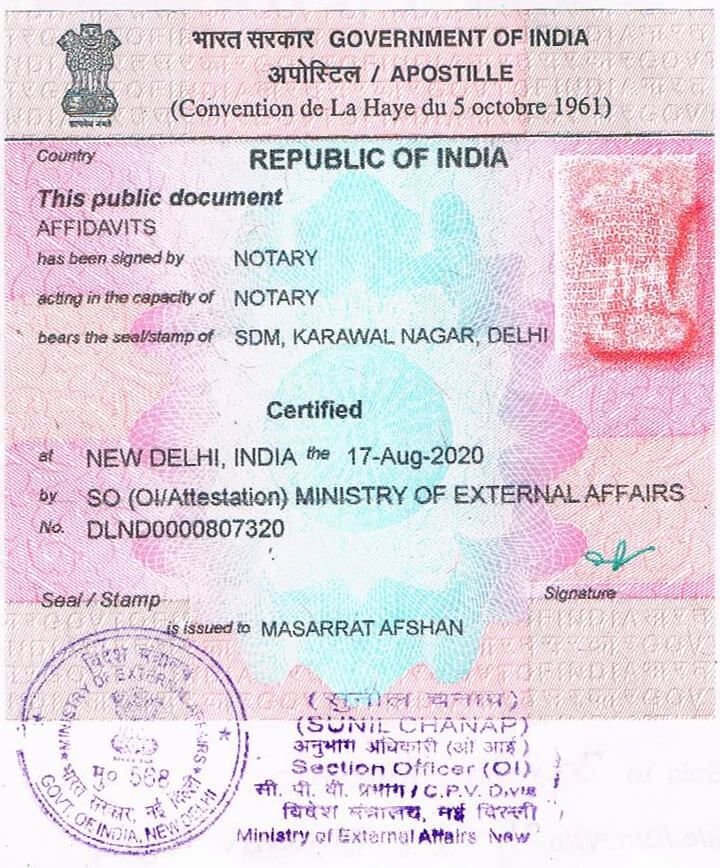
When state verification is complete, the POA document is sent to the Ministry of External Affairs, Government of India. The MEA Apostille stamp certifies the authenticity of the document.
Translation (If required)
The receiving authorities accept apostilled certificates only in their official language; the Power of Attorney may need a certified translation.
For example, German authorities do not accept apostille document in English; you may need a translation in the German language before submission.
Embassy Attestation (If required)
The Power of Attorney may need embassy or consulate attestation after verification for countries that do not accept apostille.
This process is applicable for Gulf countries and other non-Hague countries.
The apostille Power of Attorney will be delivered to your doorstep. You can also track your document status in real-time.
Fees & Time For Getting POA Apostille in India
3 – 5 Days
The Apostille Power of Attorney process normally takes 3 to 5 working days. Factors such as document verification, state authentication, and additional requirements may delay legalization.
How Does An Apostille Appear On A Power of Attorney?
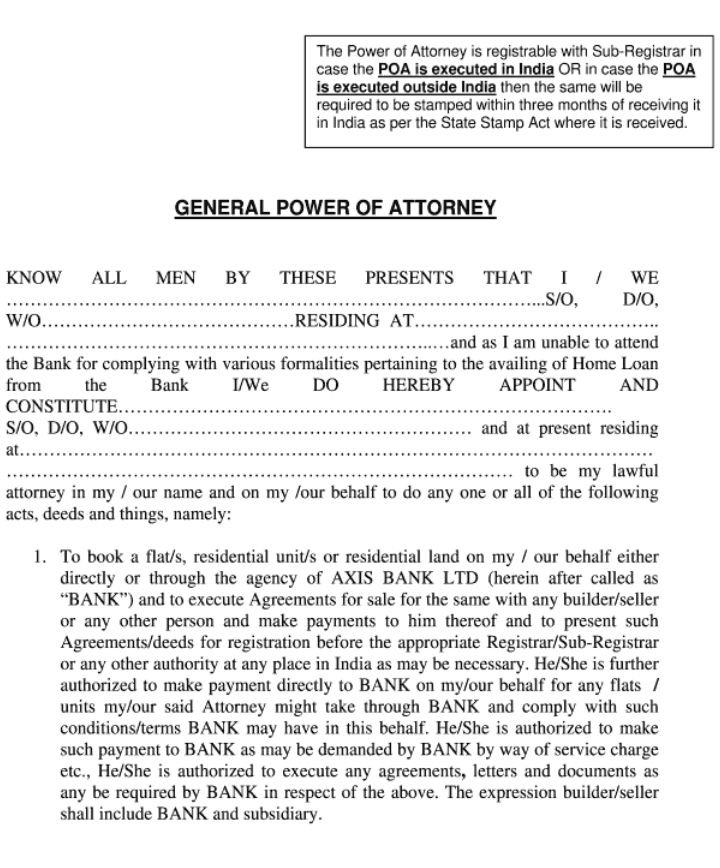
Here is a preview example of a Power of Attorney form and apostille with an official stamp.
Important Points To Consider
Difference Between Apostille And Attestation For Power Of Attorney
A single authentication step through the designated authority (MEA in India).
A multi-step process involving Notary, State & MEA attestation, and Embassy legalization.
Required for Hague Convention countries such as the USA, UK, Germany, France, Japan, and Australia.
Required for non-Hague countries such as UAE, Qatar, Saudi Arabia, Kuwait, and others.
Generally faster due to fewer verification steps.
Usually takes longer because multiple authorities are involved.
More affordable due to a simpler process.
Higher cost due to additional verification and embassy charges.
Embassy attestation is usually not required.
Embassy or consulate attestation is generally required.
Accepted by Hague Convention member countries.
Accepted according to the requirements of the destination country.
Common Reasons For Power Of Attorney Apostille Rejection
A POA apostille application may face delays or rejection due to: