How To Get Commercial Invoice Attestation in India?
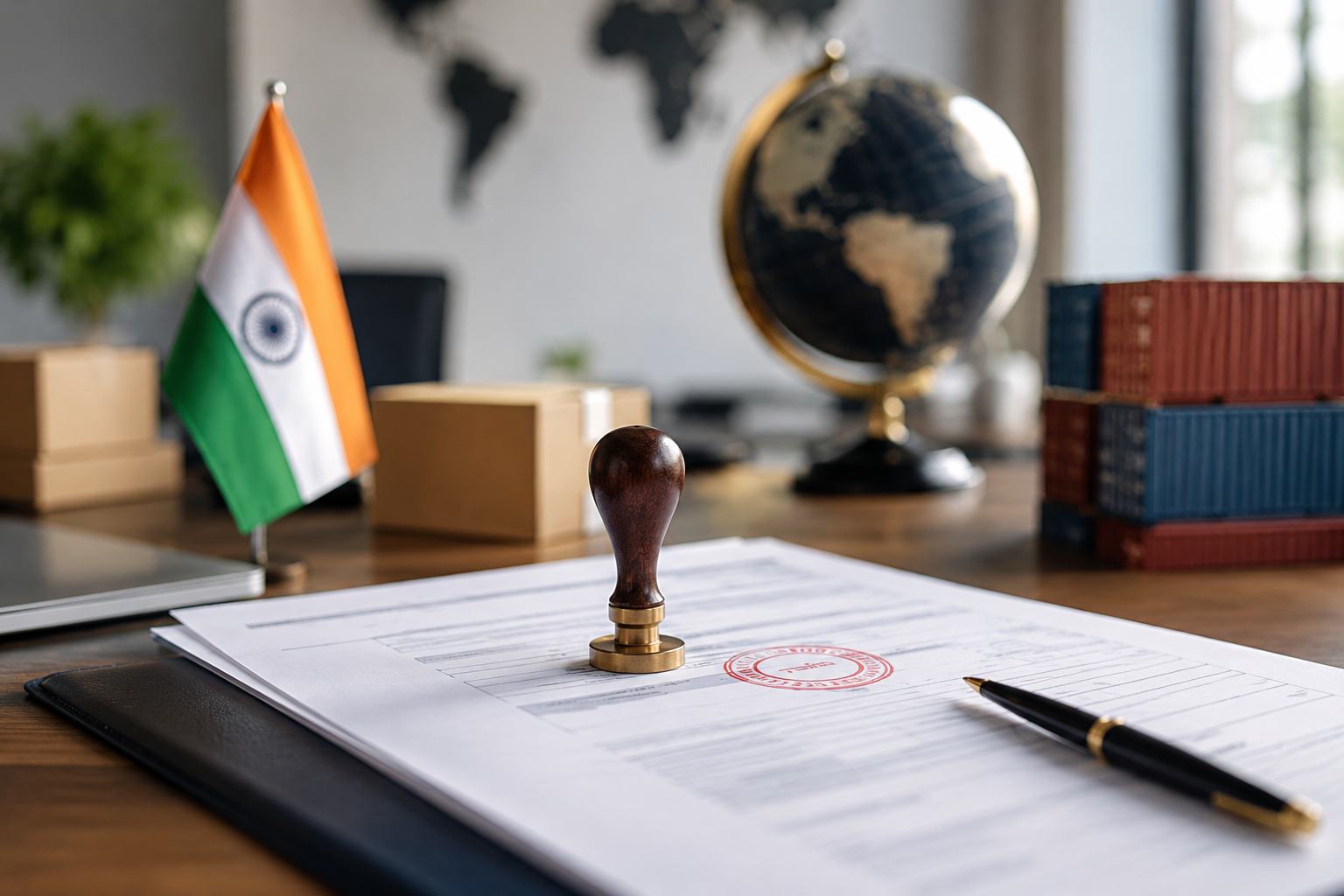
For an Indian business, Commercial Invoice Attestation is a way to prove that a business document is real and legal. Foreign governments, banks, and other organizations will accept this document if it has been stamped and signed by the Chamber of Commerce, the Ministry of External Affairs, or the Embassy or Consulate of the country you want to visit.
Any exporter will have to deal with a foreign bank, customs office, or government agency that needs an “Attested” copy of a business invoice for some reason. This is a small sentence that can stop shipments, payments, or the entire business registration abroad if it is not ready. This guide describes what commercial invoice attestation in India actually involves, why it exists, and how the process, including embassy attestation services, actually works from start to finish.
What is Commercial Invoice Attestation?
An exporter’s own record of sales-what was shipped, to whom, at what price, and under what conditions is called a commercial invoice. From the standpoint of the foreign government, it is effectively a self-declared document because it is issued and signed by the exporting corporation itself. Nothing on it independently proves that the company exists, the signer is authorized, or the transaction is genuine.
Attestation is the fix for that gap. It is a verification chain in which authorized Indian officials examine the invoice, confirm that the company and signatory are accepted standards, and layer their official endorsement on top. By the time an invoice goes through this chain, it is more than just the company’s paperwork; it is a record that a foreign government, bank, or court can trust without doing its own independent investigation of the exporter.
What does commercial invoice certification do?
Before beginning the process, it’s important to determine which of the following recurrent business circumstances apply to you:
Customs Clearance Overseas
Before releasing imported products, several countries require verified invoices. This helps prevent under-invoicing, over-invoicing, and inaccurate declaration of trade values.
Letters of Credit & Bank Guarantees
Foreign banks handling high-value international trade often require formally attested invoices before opening Letters of Credit (LCs) or releasing payments.
Foreign Branch or Subsidiary Registration
When establishing a foreign branch, liaison office, or subsidiary, overseas authorities may request certified business documents to verify the parent company’s trading activities.
Dispute Resolution & Arbitration
In international legal proceedings or arbitration, an attested invoice carries greater credibility and provides stronger documentary evidence than an uncertified invoice.
Tender & Vendor Registration
Many foreign government tenders and vendor registration processes require certified records of previous business transactions to demonstrate authenticity and compliance.
How Does Commercial Invoice Attestation Works?
This process goes through a set sequence of authorities, and each document only accepts documents that have already completed the previous step. Trying to shortcut the order, for example, sending an invoice directly to the embassy without prior verification, will only result in it being sent back.
Notary Attestation
Before the invoice enters the government chain, we first get it notarized. The notary verifies the signatory’s name and signature because every agency requires that stamp to be in place after in place.
Chamber of Commerce Verification
After that, we send it to your registered trade association or the Chamber of Commerce, where the signatory and company data are checked and the document is returned with a legitimate stamp.
MEA Attestation
We next forward it to the Ministry of Foreign Affairs, which adds its own government-level validation and verifies that the chamber seal is authentic.
Embassy Attestation
Lastly, we send it to the embassy’s attestation services (or, if necessary, apply for an apostille). The embassy adds its own stamp after confirming the MEA’s stamp, enabling non-apostille nations to recognize the invoice as legitimate.
Where Apostille Fits In
The procedure is quicker if the target nation is a signatory to the Hague Apostille Convention; following Chamber of Commerce Attestation, the MEA issues the apostille directly without the need for an embassy. Checking this before beginning is important because it affects the number of officials who will review your paper as well as the timeline.
Which Documents Are Important for This Process?
The list of documents is very narrow, but important matters and missing items are the most common reasons for returning a submission:
Original commercial invoice
signed and stamped by an authorized representative of the company; photocopies or scanned versions will not be accepted at any other stage.

Proof of Chamber of Commerce membership
if the exporting company is not registered with the relevant chamber.
Authorisation letter or board resolution
in a case where the signature is already registered in the chamber’s own database.
IEC / GST Registration Copy
Some chambers request cross-verification of the exporter’s claims, especially for first-time applicants.

Covering Letter
because this determines whether the document is sent for apostille or for embassy legalization.
How much is the Commercial Invoice Attestation Charge?
We are unable to provide a single, fixed price for invoice attestation because it varies from nation to nation. In addition to the regular Chamber of Commerce and MEA fees that every document must pass through, regardless of its destination, each embassy sets its own attestation fee. Since there is no embassy involved and the procedure ends at the MEA stage, the fee is typically lower if a nation is on the Apostille list. However, due to the additional step, expect the fees to be slightly higher for nations who still need full legalization of their embassies. The charges are broken down by country as follows:
 Qatar Embassy Attestation Services
 Kuwait Embassy Attestation Services
 UAE Embassy Attestation Services
 Philippines Embassy Attestation Services
 China Embassy Attestation Services
 Saudi Arabia Embassy Attestation Services
 Oman Embassy Attestation Services
 Yemen Embassy Attestation Services
 Malaysia Embassy Attestation Services
Processing Time and Cost
The Chamber of Commerce and the Ministry of Education usually work together to ensure that people working on the file reach the correct desk. Embassy Attestation Services add their own timeline on top of that, and this is the stage with the most variation, with some missions processing in a single day, others taking a week or more depending on internal workload and how often they handle Indian commercial documents.
The cost is not set at the national level. It depends on which state’s Chamber of Commerce is involved, the destination country’s embassy fee structure, whether the route is an apostille or embassy attestation, and whether urgent processing is requested. Separation of four items before payment, so that the government and the chamber have to deal with the clarification separately from other service charges.
Mistakes Worth Avoiding
Most of the delays here aren’t caused by anything serious; they’re caused by small errors that go unnoticed until the file is sent back.
Most applications are rejected on the first attempt. No office, notary, chamber, me, or embassy in this chain accepts anything but the original, signed copy.
Companies are always changing signatories, and if the signatory is not on file in the chamber, the document is immediately flagged. It is worth confirming who is actually authorized before the invoice goes out.
How to apply for Commercial Invoice Attestation?
Conclusion
Commercial invoice attestation turns a company’s own document into something that a foreign bank, customs office, or registrar can actually rely on. The process follows a set order: notary verification, chamber of commerce, ministry of foreign affairs, and then apostille or embassy attestation services depending on the destination country.
There are rarely any delays from the process itself. Those avoidable errors come from sending an unsigned copy instead of the original, a signature that doesn’t match the chamber’s records, or missing the embassy’s due submission days. Getting the documents right, following the correct sequence, and confirming the route to the destination country in advance is usually enough to keep things on track.
Done correctly, Attestation is not a hindrance to your export process; it is simply a step that makes your paper credible to the next recipient.