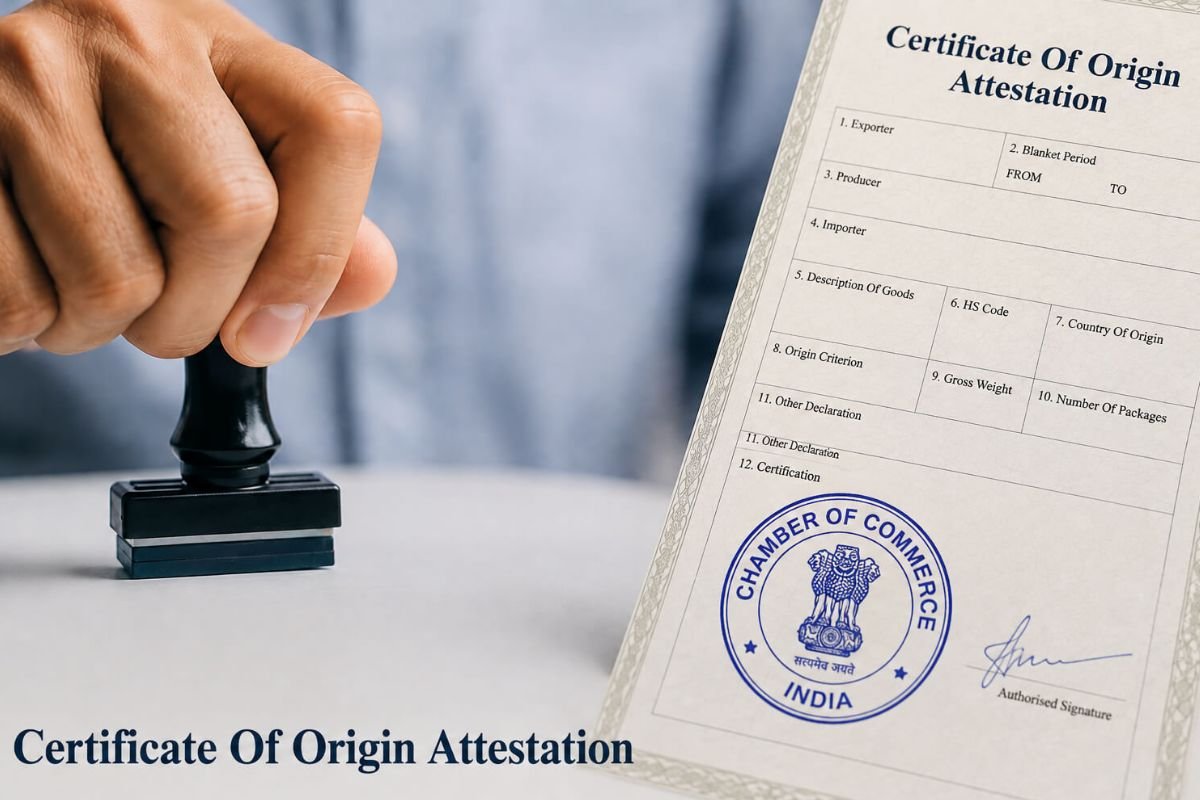
Certificate Of Origin Attestation In India
Expanding your business into international markets requires more than quality products and timely deliveries. Export firms must ensure that their commercial documents meet the legal requirements of the importing country. One essential document is the Certificate of Origin (COO).
Many importing countries, especially those in the GCC and the Middle East, require Certificate of Origin Attestation in India to confirm the document’s authenticity before processing imported goods.
Once all required attestations are completed, the Certificate of Origin is ready to be used for export, import procedures, customs clearance, and other international business requirements.
What Is A Certificate Of Origin?
A COO is a commercial document generally issued by an authorised Chamber of Commerce in India. It certifies the country where goods were manufactured, processed and produced.
Certificate of Origin helps import authorities verify the origin of imported goods and may affect applicable tariffs, trade agreements, and customs clearance.
There are two main types of Certificate of Origin:
1. Non-Preferential Certificate of Origin
Certifies the country where the goods were manufactured or produced. It is mainly used for customs clearance and import purposes.
2. Preferential Certificate of Origin
COO Issued under applicable trade agreements, it allows eligible exporters to claim reduced or zero customs duties in the importing country.
Why Is Certificate Of Origin Attestation Required?
When supplying goods to foreign markets, an attested certificate of origin plays an important role in the documentation process. Foreign countries require this attestation before accepting commercial documents for customs clearance and import procedures.
Certificate of Origin Attestation is commonly required for:
Procedure For Indian Certificate Of Origin Attestation
First, start by preparing the Certificate of Origin with the correct details about the exported manufactured products.
Chamber of Commerce Verification
The Chamber verifies the authenticity of the commercial document before further legalization. This verification ensures that the details mentioned in the certificate are accurate and acceptable for international trade purposes.
MEA Attestation
After chamber verification is completed, the document is submitted for MEA Attestation, making the document valid for further legalization.
Embassy Attestation
The COO is submitted to the respective embassy or consulate of the destination country for stamping and required embassy legalisation.
Remember, Missing documents or mistakes in the Certificate can cause delays or rejection during attestation. Prime Apostille Services can help verify your documents, handle the entire process, and ensure a smooth completion in accordance with destination-country requirements.
List of Required Documents For Certificate Of Origin Attestation
Mandatory Documents
Required for Certificate of Origin Attestation
Conditional Documents
Required depending on the destination country and export requirements
Each country has its own rules for accepting commercial certificates. Additional verification or supporting documents may be required, depending on the destination.
How To Get Certificate Of Origin Attestation?
The Certificate of Origin Attestation process involves multiple verification steps due to different country requirements and document verification procedures. Our simple 4-step process makes completing the attestation process hassle-free.
Fees & Time For Certificate Of Origin Attestation
The fees for Certificate of Origin Attestation are between INR 2000 and INR 3500 + Embassy fees, and vary by document type and the number of authentication levels required.
Estimated Processing Time
Several Factors Affecting Fess
Certificate of Origin Attestation generally does not have a fixed validity period. The attestation is valid as long as the Certificate of Origin is issued for a particular export shipment or commercial transaction.
If a new shipment is made or a fresh Certificate of Origin is issued, a new attestation may be required based on the destination country’s regulations.
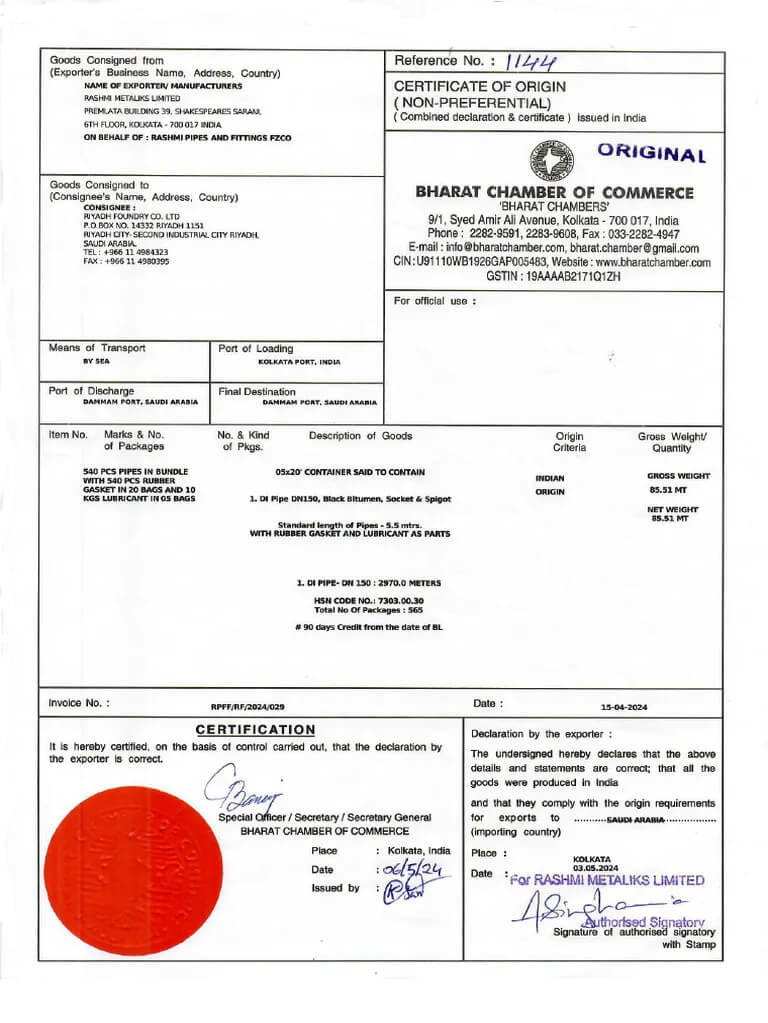
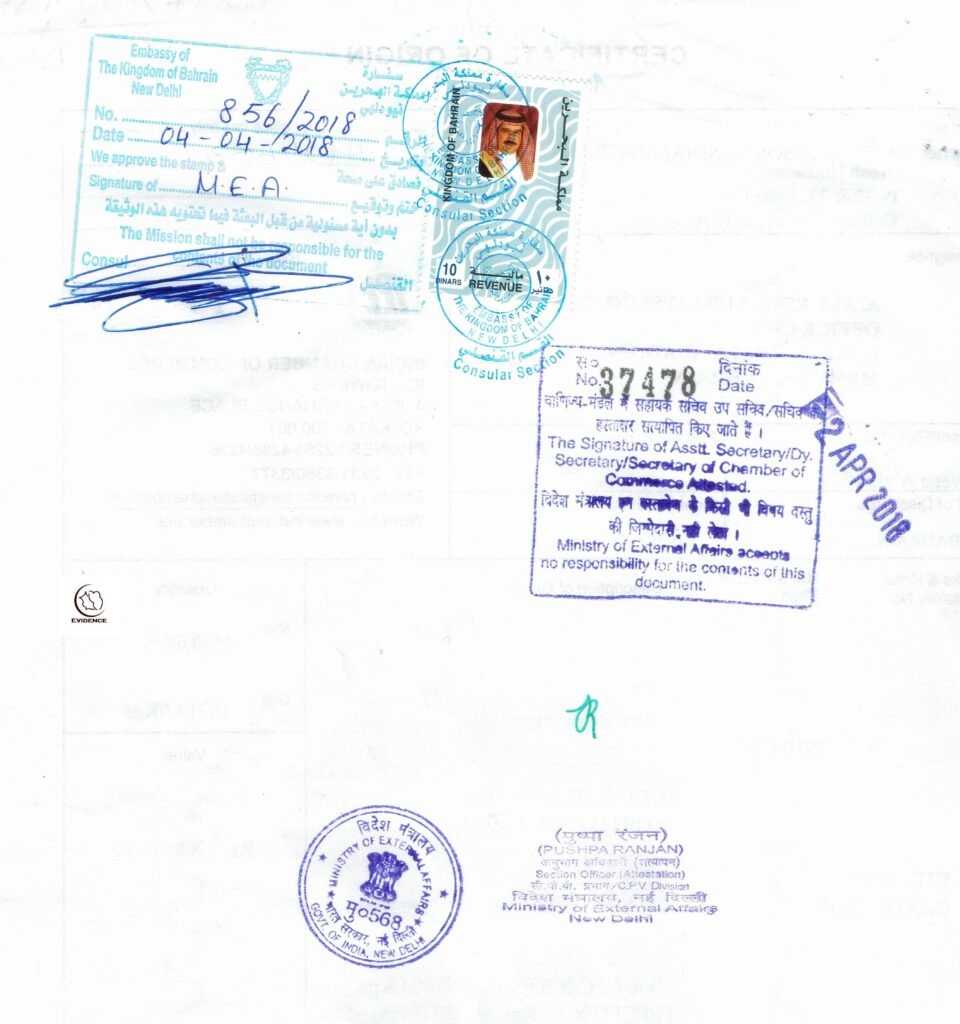
How Attestation Stamp Appear On The Certificate?
Here’s how the Certificate of Origin look and where the Attestation stamp appears on it.